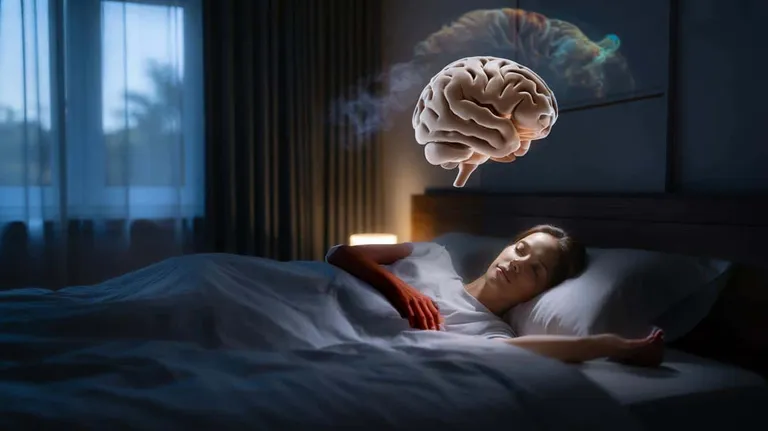
A Shocking Claim — and the Science Behind It
Recent scientific research has sparked headlines claiming that “the brain eats itself when we don’t dream.”
While that phrase sounds alarming, the real science behind it is both fascinating and important — especially in understanding why dreaming and deep sleep are essential for brain health.
So, what’s really happening in the brain when we don’t dream enough?
🧠 What Scientists Actually Discovered
Researchers studying sleep deprivation found that lack of REM sleep (the stage when most dreaming occurs) triggers increased activity in a process called synaptic pruning.
This process is natural and healthy in balance — but problematic when overactivated.
In simple terms:
- During sleep, the brain cleans up weak or unnecessary neural connections
- When sleep — especially REM sleep — is disrupted, this cleanup process can become too aggressive
This is where the metaphor “the brain eats itself” comes from.
🔬 The Key Process: Synaptic Pruning
Synapses are the connections between brain cells.
Every day, your brain creates and strengthens thousands of these connections.
During sleep:
- Useful connections are preserved
- Weak or unused connections are removed
Without proper dreaming:
- The brain may begin removing too many connections
- This can affect memory, learning, and emotional regulation
Importantly, this does not mean the brain is being destroyed, but that its maintenance system becomes unbalanced.
🌙 Why Dreaming Matters
Dreaming — especially during REM sleep — plays a critical role in:
- Memory consolidation
- Emotional processing
- Learning and creativity
- Stress regulation
- Mental health stability
Studies show that chronic REM sleep deprivation is linked to:
- Memory problems
- Anxiety and depression
- Reduced cognitive performance
- Increased risk of neurodegenerative diseases
Dreams are not random — they are part of the brain’s recovery system.
🧪 What Happens When We Don’t Sleep or Dream Enough?
Researchers observed that prolonged sleep deprivation can lead to:
- Increased breakdown of synaptic connections
- Reduced brain plasticity
- Impaired decision-making
- Emotional instability
This helps explain why people who consistently lack sleep feel mentally “foggy” or emotionally reactive.
⚠️ Important Clarification
The phrase “the brain eats itself” is a metaphor, not a literal biological event.
- ❌ The brain does not consume itself
- ❌ Dream loss does not immediately damage the brain
- ✔ Chronic sleep deprivation can disrupt normal brain maintenance
The takeaway is about balance, not fear.
🛌 How to Protect Your Brain and Support Healthy Dreaming
To support healthy REM sleep and dreaming:
- Sleep 7–9 hours per night
- Keep a consistent sleep schedule
- Avoid screens at least 1 hour before bed
- Reduce alcohol and late caffeine
- Manage stress before sleep
- Sleep in a dark, quiet environment
These habits help restore the brain’s natural repair cycles.
🧠 The Takeaway
Dreaming is not a luxury — it’s a biological necessity.
While the idea that the brain “eats itself” without dreams is an exaggeration, science clearly shows that dreaming plays a vital role in maintaining healthy brain connections.
Protect your sleep.
Protect your dreams.
Your brain depends on it.
By ✍️ Yorlinda Ramìrez- MicuPost Team
Sources: