A Major Step Forward in Genetic Research
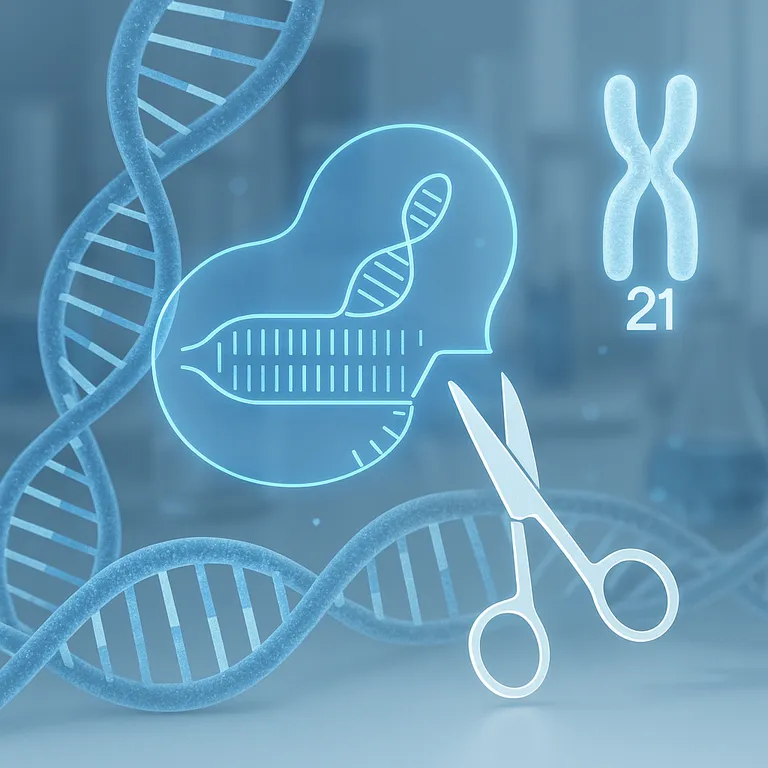
In a groundbreaking scientific achievement, researchers have used CRISPR gene-editing technology to successfully silence the extra chromosome responsible for Down syndrome — also known as trisomy 21.
While this research is still in its early stages and not a treatment, it represents a major milestone in understanding genetic conditions and opens new possibilities for future therapies.
🧬 What Causes Down Syndrome?
Down syndrome occurs when a person is born with an extra copy of chromosome 21.
This additional genetic material affects development and can lead to:
- Intellectual disability
- Distinct facial features
- Increased risk of heart defects
- Higher chances of certain medical conditions
Until now, there has been no way to address the root genetic cause — only treatments to manage symptoms.
🔬 How CRISPR Was Used in This Study
Instead of deleting genes, scientists used CRISPR to switch off (silence) the extra chromosome.
The researchers:
- Identified key regulatory regions on chromosome 21
- Used CRISPR-Cas9 to target and suppress the additional copy
- Successfully normalized gene expression in lab-grown cells
Importantly, the extra chromosome was not removed, but deactivated, reducing its impact on cellular function.
🧠 Why This Is So Important
By restoring balanced gene activity, scientists observed:
- Improved cellular behavior
- Reduced genetic stress
- More typical patterns of gene expression
This could help researchers better understand:
- Brain development
- Cognitive differences
- How trisomy affects organ formation
It is a powerful research tool for studying Down syndrome at a molecular level.
⚠️ What This Does Not Mean
It’s crucial to be clear and responsible:
- ❌ This is not a cure
- ❌ This is not a therapy for people
- ❌ This research was conducted in laboratory cells only
- ❌ There are no human trials
The work is focused on understanding biology, not changing individuals or erasing identities.
🧭 Ethical Considerations
The use of CRISPR in genetic conditions raises important ethical questions:
- Should gene editing be used in embryos?
- How do we balance medical research with respect for neurodiversity?
- Who decides how such technology is applied?
Scientists emphasize that this research aims to improve medical understanding and care, not to eliminate people with Down syndrome.
🌍 What This Means for the Future
In the long term, this breakthrough could:
- Improve treatments for Down syndrome–related health conditions
- Help develop targeted therapies for specific symptoms
- Advance research into other chromosomal disorders
CRISPR continues to show its potential as a precision research tool, reshaping genetics one careful step at a time.
🕊️ The Takeaway
Silencing the extra chromosome linked to Down syndrome using CRISPR is a scientific milestone — not because it promises immediate treatment, but because it deepens our understanding of human genetics.
This discovery opens doors to better research, better care, and better conversations about the future of genetic medicine — guided by science, ethics, and compassion.
By ✍️ Yorlinda Ramìrez- MicuPost Team
Sources: